People Remember Moments, Not Messages.
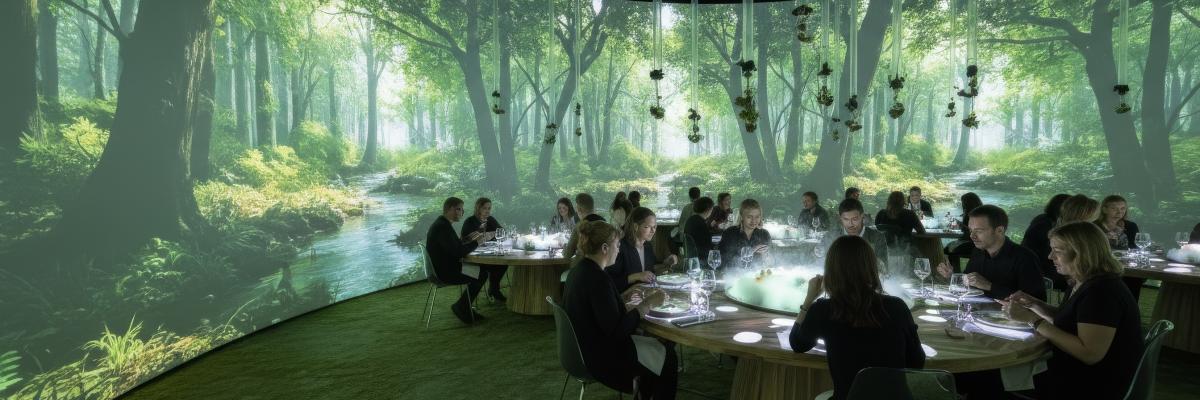
How we elevate events into experiences that leave a lasting impact.
In a world overloaded with content, notifications, and constant noise – live experiences still hold something uniquely powerful: human attention.
But attention alone isn’t enough anymore.
Today’s audiences expect more than polished presentations and branded booths. They want experiences that feel immersive, personal, and emotionally engaging. They want moments worth remembering.
The challenge? Most events are competing for attention in an already overstimulated environment. According to Forbes1, people are exposed to thousands of brand messages every single day, making genuine audience connection harder than ever. The events that stand out are the ones that make attendees feel something – whether that’s excitement, curiosity, empathy, or a sense of belonging.
At CTL Communications, we believe the most memorable brand experiences are built through human connection, creative bravery, and thoughtful design. Let’s look at some of the key principles we use to transform live events into experiences that audiences genuinely remember.
Start with emotion, not logistics
The strongest events don’t begin with staging plans, technology, or entertainment.
They begin with people.
To create a meaningful experience, brands first need to understand their audience:
- What matters to them?
- What challenges are they facing?
- What emotions or motivations drive them?
- What do they need from the experience?
When audiences feel understood, engagement becomes far more natural. After all, emotional connection has been shown to increase attention, participation, and long-term recall.
Storytelling plays a huge role in this. Real stories, whether employee experiences, customer challenges or authentic conversations, consistently become the moments audiences remember most. According to Harvard Business Review2, emotionally connected audiences are significantly more likely to retain information and develop stronger brand affinity.
At CTL, we’ve seen first-hand how human-centred storytelling can transform an event from informative to unforgettable.
Don’t talk at audiences – involve them
If experiences feel personally relevant, audiences are far more likely to remember them.
That doesn’t necessarily mean full-scale personalisation for every attendee. Often, it’s more about creating moments where people feel involved, recognised, or able to shape their own journey.
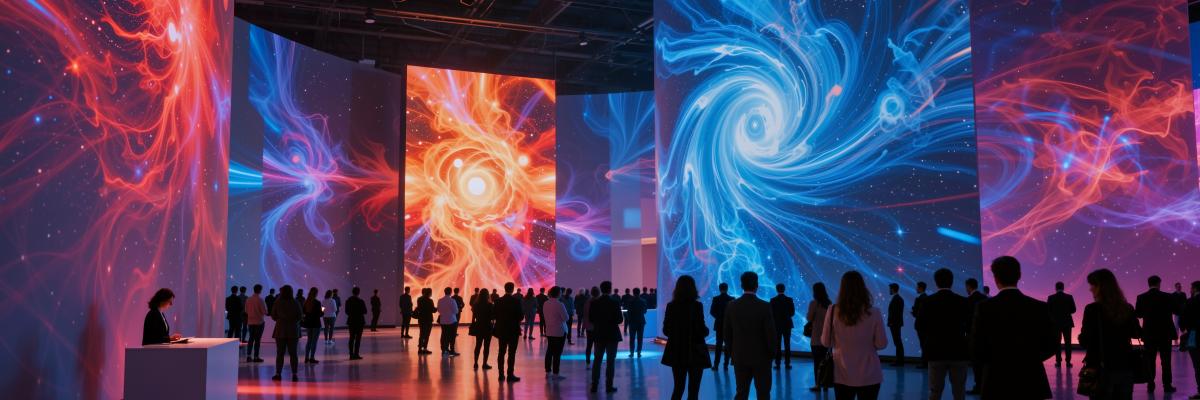
Interactive experiences are especially powerful because they shift attendees from passive observers to active participants – often including:
- Choose-your-own-path activations
- Immersive walkthrough experiences
- Interactive digital content
- Personalised challenges or learning journeys
- Tailored networking opportunities
Research from EventMB3 shows that participatory event experiences significantly increase audience engagement and memory retention.
As a result, we consistently find that experiences driven by curiosity and interaction feel more human - and ultimately more memorable.
Plus, if you don’t want to leave this immersive involvement up to chance (i.e. creating an immersive world and leaving it for attendees to explore), you don’t have to.
To maximise long lasting brand impact, we frequently plot out our delegate’s emotional journey – from the first email to the closing moments – ensuring there are curated touchpoints throughout that will keep them invested in your messaging, with strong results.
The best experiences are felt, not just seen
One of the biggest missed opportunities in live events is the overreliance on visual communication alone.
Instead, the strongest brand experiences engage multiple senses at once. Sound, touch, scent, and taste all play an important role in how memories are formed and recalled – so why wouldn’t you take advantage of that immersive potential?
In fact, research published by the Harvard Gazette highlights how scent connects directly to the brain’s emotional and memory-processing centres, making it one of the most powerful sensory triggers for memory recall4. Additional studies published in the Journal of Environmental Psychology5 also demonstrate how environmental sensory cues significantly influence emotional response and perception6.
Clearly, that opens up huge creative opportunities for live experiences, such as:
- Tactile product demonstrations
- Sensory immersion zones
- Signature scents
- Interactive food and drink concepts
- Hands-on simulations
- Soundscapes and environmental design
At CTL, we’re increasingly exploring how multi-sensory design can deepen audience connection and create more lasting emotional associations with brands.
Memory needs an anchor
Memorable experiences shouldn’t end when attendees leave the venue.
Physical objects and takeaways can help anchor memories long after an event finishes – but the key is making them meaningful rather than purely promotional.
Research around the “IKEA Effect,” first explored by Harvard Business School7, found that people place greater emotional value on things they have helped create themselves.
That principle applies strongly to event experiences, where some of the most effective take-homes are:
- Personalised items linked to attendee identity
- Co-created content or experiences
- Emotionally meaningful keepsakes
- Interactive objects tied to the event narrative
The goal isn’t simply filling people’s pockets with branded merchandise. It’s creating tangible memory anchors that extend the emotional impact of the experience beyond the event itself.
Micro moments. Massive impact
One of the fastest ways to make an experience memorable is through surprise.
Unexpected moments activate attention and pull audiences out of autopilot, making them far more likely to remember what happens next. According to neuroscientific research published in Nature Reviews Neuroscience8, surprise plays a major role in strengthening memory formation.
But effective surprise isn’t about randomness. It works best when it feels intentional, relevant, and emotionally connected to the wider experience.
Interestingly, some of the most impactful moments are often small, highly personal interactions rather than large-scale spectacle:
- Unexpected personalised touches
- Hidden interactive moments
- Bespoke digital experiences
- Thoughtful emotional reveals
- Micro “wow” moments tailored to the audience
Sometimes the smallest moments create the strongest memories – so thinking big can actually mean thinking small.
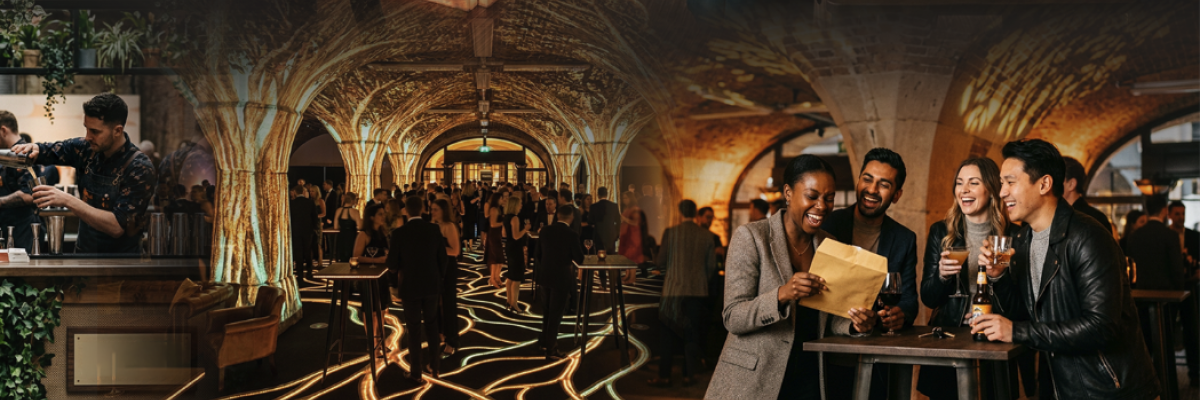
With CTL, you can go From Event to Experience
Creating memorable brand experiences at face-to-face events is no longer just about delivering information – it’s about designing moments people emotionally connect with and genuinely remember.
The most successful events combine strategy, creativity, storytelling, sensory design, and human understanding to create experiences that feel authentic and meaningful.
At CTL Communications, we believe the strongest event experiences happen when brands are brave enough to move beyond the expected and put people at the centre of the experience.
Because when your event creates a deeper level of connection, it creates a stronger sense of personal impact and recall, meaning the more your event made your audience feel, the more they will remember the key messages you shared throughout.
So, if you’d like to explore how CTL can help create more impactful live experiences for your audience, please get in touch at [email protected].
- 1
Forbes Business Council (2024) Using Experiential Marketing When Building Or Growing Your Brand. Forbes. Available at: https://www.forbes.com/councils/forbesbusinesscouncil/2024/08/21/using-experiential-marketing-when-building-or-growing-your-brand/ (Accessed: 28 July 2026).
- 2
Zak, P.J. (2014) ‘Why Your Brain Loves Good Storytelling’, Harvard Business Review. Available at: https://hbr.org/2014/10/why-your-brain-loves-good-storytelling (Accessed: 28 July 2026).
- 3
Certain/EventMB (2024) 20 Event Formats Proven to Drive Engagement. Available at: https://certain.com/blog/20-event-formats-to-drive-engagement/ (Accessed: 28 July 2026).
- 4
Harvard Gazette (2020) How Scent, Emotion, and Memory Are Intertwined — And Exploited. Available at: https://news.harvard.edu/gazette/story/2020/02/how-scent-emotion-and-memory-are-intertwined-and-exploited/ (Accessed: 28 July 2026).
- 5
Harvard Gazette (2020) How Scent, Emotion, and Memory Are Intertwined — And Exploited. Available at: https://news.harvard.edu/gazette/story/2020/02/how-scent-emotion-and-memory-are-intertwined-and-exploited/ (Accessed: 28 July 2026).
- 6
Spangenberg, E.R., Crowley, A.E. and Henderson, P.W. (1996) ‘Improving the Store Environment: Do Olfactory Cues Affect Evaluations and Behaviors?’, Journal of Environmental Psychology, 16(1), pp. 67–80.
- 7
Harvard Business School Online (2023) What Is a Brand Story?. Available at: https://online.hbs.edu/blog/post/brand-story (Accessed: 28 July 2026).
- 8
Ranganath, C. and Rainer, G. (2003) ‘Neural mechanisms for detecting and remembering novel events’, Nature Reviews Neuroscience, 4(3), pp. 193–202